




Introduction
If your skin started acting differently in your 40s or 50s, you are not imagining it. You are also far from alone. In February 2026, the American Academy of Facial Plastic and Reconstructive Surgery (AAFPRS) released its 2025 member survey. One finding stood out: 45% of Facial Plastic Surgeons report more women citing menopause or perimenopause as a reason for treatment. Just one year earlier, that number was 28%.
Women are connecting the dots between their hormones and the changes they see in the mirror. Drier skin. Breakouts that feel like high school all over again. A face that looks a little different in photos.
Dr. Karen Horton’s practice is 100% women operated, so these conversations come naturally here. Below, we explain what menopause does to your skin and face. We also share how our Aesthetic Nurse Practitioner Danielle Bautista, MSN, ANP builds a plan around your specific symptoms.
Why Menopause Shows Up in the Mirror
Your skin is full of hormone receptors. When estrogen, progesterone, and testosterone decline, your skin feels the difference.
Here is what each hormone does for your skin before menopause:
- Estrogen supports collagen production, the skin’s support structure, and its blood supply.
- Progesterone helps build that support structure and helps skin hold on to water.
- Testosterone supports blood flow to the skin and oil production. Less of it can mean drier skin.
The collagen numbers are striking. Women lose about 30% of their skin’s collagen in the first five years of menopause. After that, the loss continues at about 2% per year.
Timing matters too. Perimenopause, the transition before your final period, can last four to eight years. Many women notice skin changes long before menopause is official. These changes can also feel sudden. Researchers note that skin aging in men tends to be gradual. Menopause-related changes in women can arrive abruptly and feel distressing.
Hormone therapy is a separate conversation for your gynecologist or primary care doctor. Our focus is helping your skin and face look and feel like you again.
How Menopause Can Change Your Skin and Face
Every woman’s experience is different. Still, Danielle sees a few patterns again and again in women going through perimenopause and menopause. These include:
- Drier skin. Lower hormone levels mean less oil and less water held in the skin. Products that worked for years may suddenly feel like not enough.
- Hormonal acne. Shifting hormone levels can trigger breakouts in midlife. Those breakouts can leave dark marks behind, called post-inflammatory hyperpigmentation (PIH).
- Changes in skin texture. As collagen declines, skin can look thinner, crepier, or less smooth.
- Structural changes in facial shape. Volume and support beneath the skin shift over time. Your face shape can look different, even when your skin care routine has not changed.
The good news? Each of these concerns has its own treatment options. You do not need to treat them all at once, and you do not need a one-size-fits-all package.
Menopause Skin Treatments, Matched to Your Symptoms
There is no single menopause treatment. Our Aesthetic Nurse Practitioners start with your symptoms, then match each concern to the right option. Here is a quick look at how they think about it.
| Your concern | Options Our NPs may recommend |
|---|---|
| Hormonal acne or dark marks (PIH) | Skin care adjustments like azelaic acid; IPL; Clear + Brilliant™ |
| Skin that feels less firm or elastic | Skin tightening with XERF |
| Subtle changes in facial shape or volume | Hyaluronic acid fillers |
| Volume loss plus dull or thin skin | PRF or EZ Gel |
| Lines that stay when your face is at rest | BOTOX® at regular intervals |
Skin Care Adjustments
Small changes at home can make a real difference. For breakouts and lingering dark marks, Danielle may suggest adding azelaic acid to your routine. It helps calm acne and fade PIH over time.
You can find physician-grade products in our office.
IPL and Clear + Brilliant™
Intense pulsed light (IPL) and Clear + Brilliant™ are in-office treatments with minimal downtime. They can help decrease active acne. They can also fade PIH once the breakouts have cleared.
 Skin Tightening With XERF
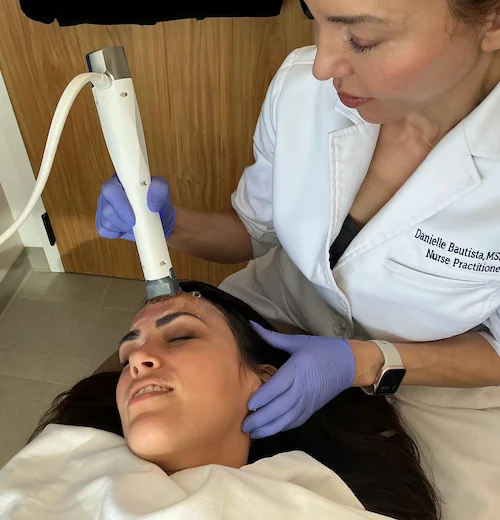
If your skin is not as taut or elastic as it used to be, skin tightening may be an option. XERF uses radiofrequency energy to heat the deeper layers of the skin. That gentle heat encourages your body to build new collagen.
Hyaluronic Acid Fillers
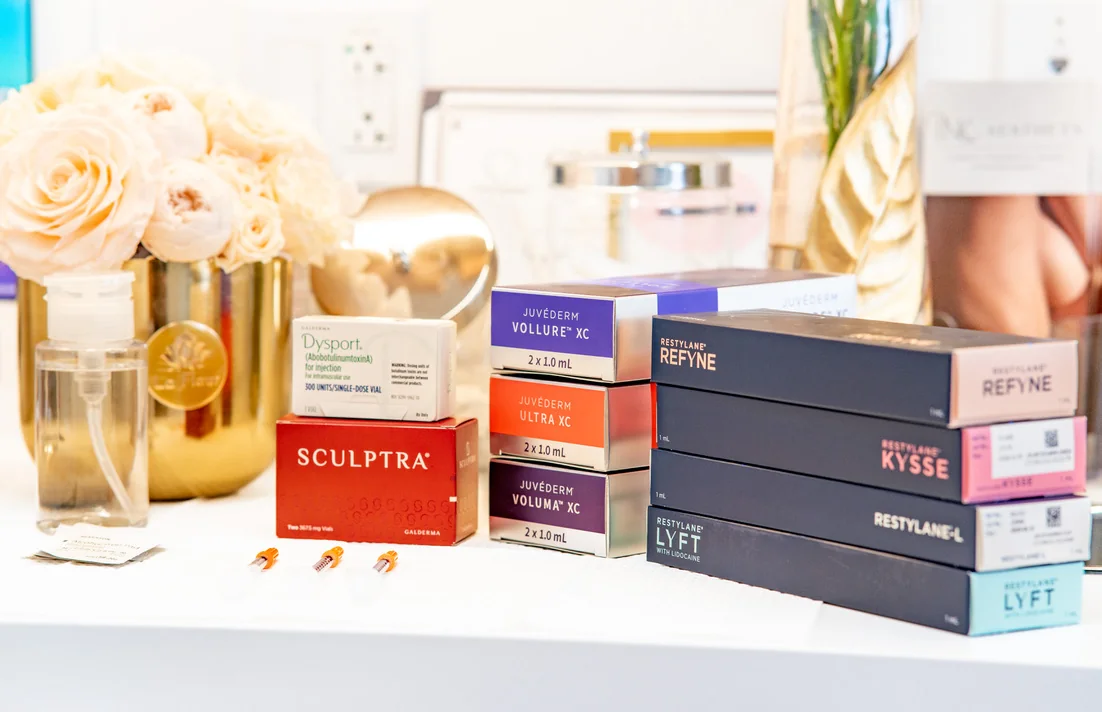
Hyaluronic acid fillers can provide subtle structural balancing. Placed thoughtfully, they help restore volume where your face has changed shape. The goal is natural-looking results, not a different face.
In the 2025 expert roundtable on menopausal skin, the panel named injectable hyaluronic acid among the most effective treatments for hormone-related skin changes.
PRF and EZ Gel
Platelet-rich fibrin (PRF) and EZ Gel are made from a small sample of your own blood. They can be a more natural option for women with both volume and skin quality concerns.
BOTOX® at Regular Intervals
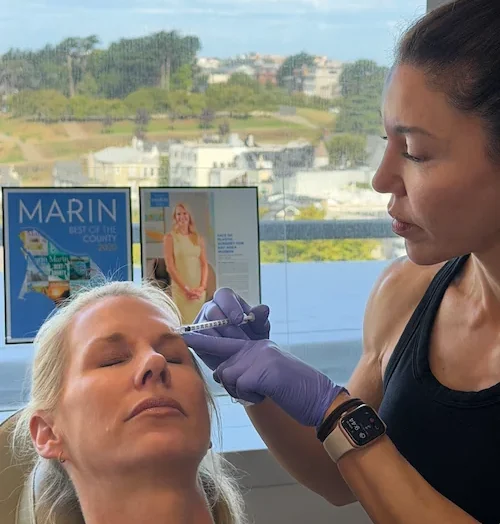
Thinner skin is more likely to develop static lines. These are creases that stay visible even when your face is relaxed. Keeping BOTOX® treatments on a regular schedule helps soften movement before those lines set in.
When Facial Plastic Surgery Makes Sense
Non-surgical treatments work best for early to moderate changes. When skin laxity is more advanced, surgery can offer a more lasting solution.
Dr. Horton is an Internationally Board-Certified Plastic Surgeon who performs every surgical procedure at our practice. For women with significant sagging in the face, jawline, or neck, she may recommend:
Many women combine approaches over time. Surgery can address deeper structural changes. Non-surgical care with our Aesthetic Nurse Practitioners then helps to maintain skin quality for the long term. If you are not sure which path fits, that is exactly what a consultation is for.
Feel Like Yourself Again
Menopause is a normal part of life. The skin changes that come with it are real, common, and treatable. The 45% figure tells an encouraging story. More women are naming menopause out loud and asking for care that fits this stage of life.
At our Pacific Heights practice, you get a plan built around your symptoms, your goals, and your timeline. Our Aesthetic Nurse Practitioners can guide you through non-surgical options. Dr. Horton is here when surgery is the right next step.
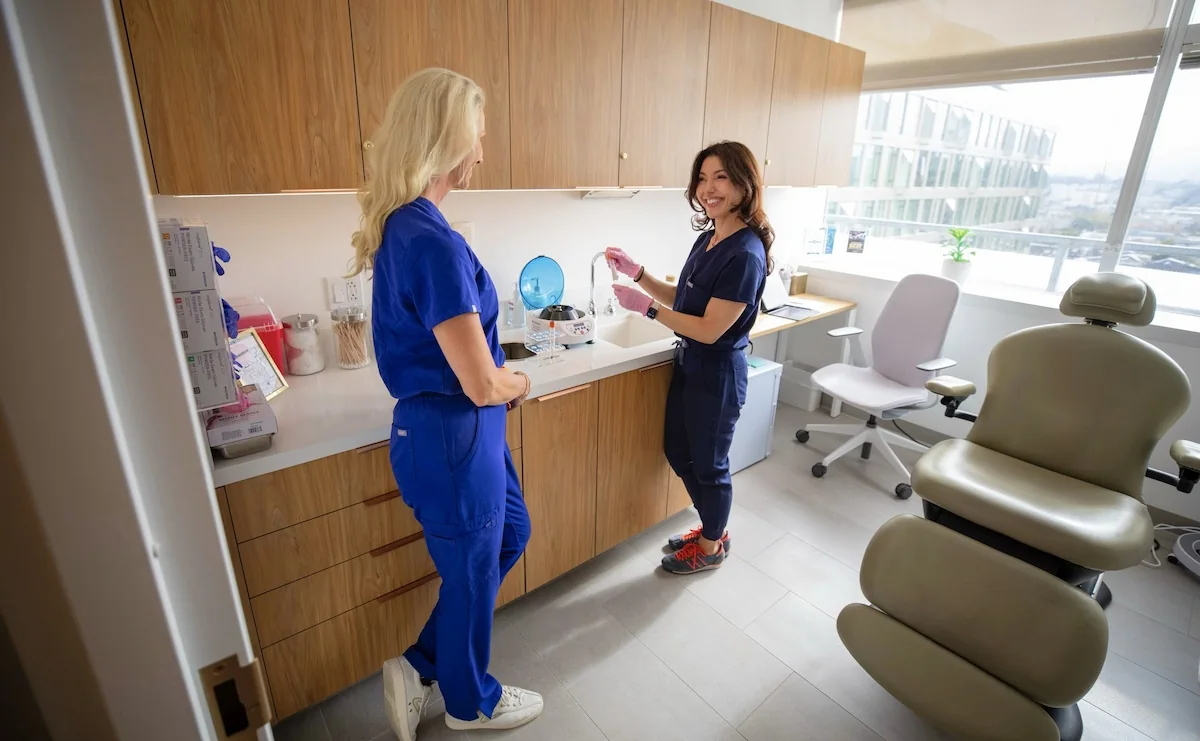
Ready to talk it through? Schedule a Consultation in person or virtually. Financing is available through Cherry, PatientFi, and CareCredit.
Frequently Asked Questions
Can menopause cause acne?
Yes. Shifting hormone levels during perimenopause and menopause can trigger breakouts in adult women. Skin care changes like azelaic acid, plus treatments like IPL or Clear + Brilliant™, can help. They can also fade the dark marks acne leaves behind.
Does menopause change your face shape?
It can. Declining hormones affect collagen, volume, and the support structures beneath your skin. Over time, these shifts can change how your face looks. Hyaluronic acid fillers, PRF, or EZ Gel can help restore subtle balance.
What is the best treatment for menopause skin?
There is no single best treatment. The right plan depends on your symptoms, whether that is dryness, acne, laxity, or volume loss. Our Aesthetic Nurse Practitioners build a plan around the concerns that matter most to you.
When should I start treating menopause skin changes?
You do not have to wait for menopause to be official. Perimenopause can last four to eight years, and skin changes often begin during that window. Starting early gives you more options.
Do I need surgery to treat menopause-related facial changes?
Not always. Many women see meaningful improvement with non-surgical care. When sagging is more advanced, Dr. Horton may discuss a facelift, neck lift, or eyelid surgery.
Sources
1 AAFPRS Reveals the Trends Defining Facial Plastic Surgery
2 Round Table Discussion: Aesthetic Treatment Considerations for the Perimenopausal & Menopausal Patient
3 PMC12374573
4 Clinics in Dermatology article