




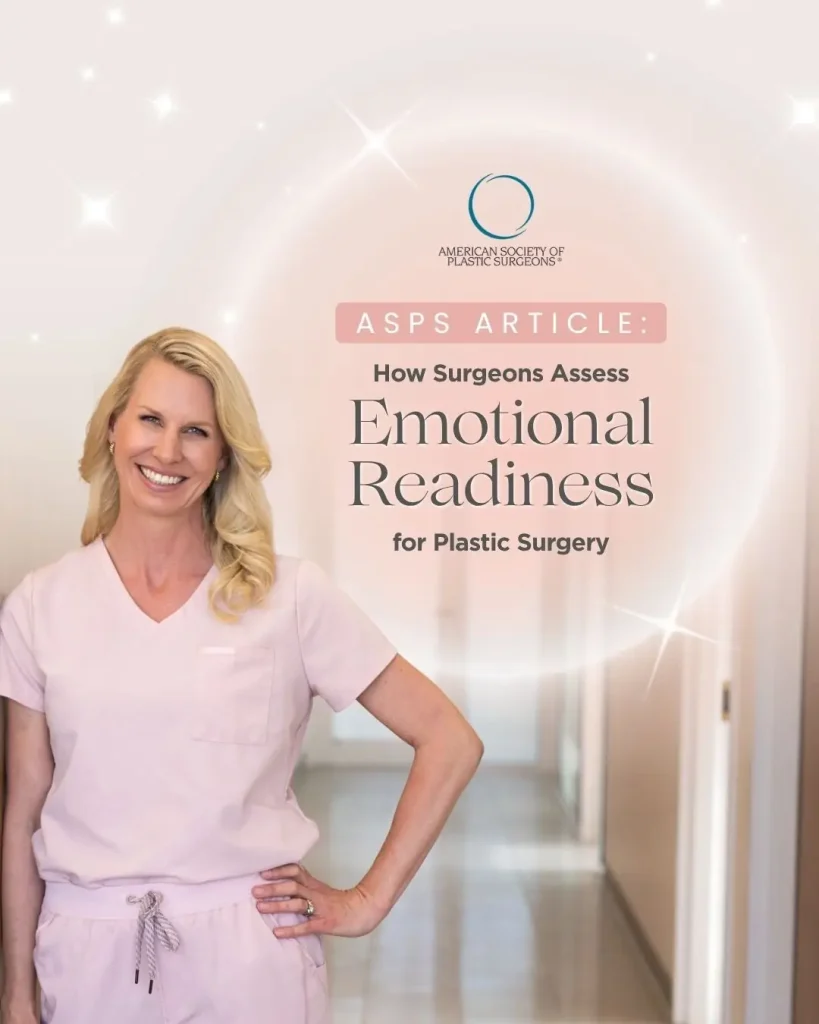
When people think about preparing for Plastic Surgery, they often focus on the physical aspects of the procedure. However, emotional preparation is just as important as understanding the surgery itself.
Dr. Karen Horton, a Board-Certified Plastic Surgeon in San Francisco, was recently interviewed for an article published by the American Society of Plastic Surgeons (ASPS) discussing how surgeons evaluate emotional readiness before cosmetic procedures. The article highlights an important but often overlooked aspect of the Plastic Surgery journey: ensuring that patients have realistic expectations and are pursuing treatment for healthy, personal reasons.
Why Emotional Readiness Matters
Plastic Surgery can improve confidence and help patients feel more comfortable in their appearance. However, surgery is not a cure for relationship problems, career challenges, or deeper emotional struggles.
Patients who are emotionally prepared for surgery typically have a clear understanding of:
- Why they want the procedure
- What results are realistically achievable
- What recovery may involve
- How long it can take for final results to develop
A strong emotional foundation often contributes to a more positive overall experience.
The Role of the Consultation
A consultation with a Board-Certified Plastic Surgeon involves much more than discussing techniques and treatment options. It is also an opportunity to explore goals, motivations, and expectations.
Surgeons often ask questions about what prompted a patient to seek treatment and what they hope to achieve. These conversations help identify whether a patient is pursuing surgery for themselves or feeling pressure from outside influences, such as social media, family members, or unrealistic beauty standards.
Setting Realistic Expectations
One of the most important aspects of emotional readiness is understanding that Plastic Surgery can enhance features, but it cannot create perfection.
Every patient has unique anatomy, healing patterns, and limitations. The best outcomes occur when patients focus on improvement rather than perfection and understand that results continue to evolve throughout the recovery process.
Recovery Includes Emotional Ups and Downs
Many patients are surprised to learn that recovery can involve emotional highs and lows. Swelling, bruising, temporary discomfort, and the healing process itself can affect how patients feel during the first few weeks after surgery.
Understanding this ahead of time helps patients remain patient and focused on long-term results rather than judging outcomes too early.
A Thoughtful Approach to Surgery
Dr. Horton believes that successful Plastic Surgery begins with honest communication, education, and realistic expectations. An important part of the consultation process is ensuring that patients understand both the potential benefits and limitations of surgery, as well as the motivations behind their decision.
When patients feel confident in their decision and understand both the benefits and limitations of surgery, they are better positioned for a positive experience and lasting satisfaction with their results.
Considering Plastic Surgery?
If you are exploring Plastic Surgery and want personalized guidance in a supportive environment, Dr. Karen Horton and her team are here to help. Schedule a consultation to discuss your goals, ask questions, and learn whether a procedure is right for you.