Your Questions, Answered
Real Insights from Dr. Karen Horton on Recovery, Preparation & Everything In Between
By Dr. Karen Horton, Board-Certified Plastic Surgeon
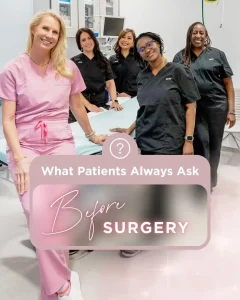
One of the things I love most about connecting with my patients and community is the opportunity to answer real questions that are pondered by most, if not all, Plastic Surgery patients. Below, I’ve compiled some of the most thoughtful (and most common) questions I’ve received recently. Whether you’re preparing for surgery, in the middle of recovery, or simply curious, I hope you find these answers helpful.
Should I plan to recover home ALONE after surgery?
In short: NO! Please don’t try to go it alone. While you don’t always need to hire a private duty Nurse, having someone with you during the initial days of recovery is important, even if it’s a minor procedure.
Elective cosmetic surgery is a meaningful investment of your time, your trust, and your resources – and you deserve to give yourself every advantage for a smooth recovery. That means having a support person nearby who can help you with simple tasks, monitor how you’re feeling, bring you to your first follow-up appointment and make sure you’re comfortable and safe.
For surgeries under general anesthesia, you MUST have someone who knows and cares about you (or a hired caregiver) pick you up from our surgery center, bring you home and stay with you at least the first postoperative night, for safety.
I take a GLP-1 medication. When should I stop it before surgery? And why?
This is a great question, and one I get every day. Each patient is different, so the most important recommendation is to have this conversation directly with your surgeon, as rules differ from hospitals to surgery centers to private practices.
That said, the general clinical consensus is to discontinue GLP-1 medications at least one week before minor surgery (local anesthesia cases), and at least one month in advance of surgery planned under general anesthesia. There is a real risk of aspiration and potential deadly pneumonia if you have GLP-1 effects on board before you go to sleep and are intubated before surgery.
To learn more, read this blog post that describes specific risks related to GLP-1 medications and surgery (even for microdosing regimens).
When can I restart my GLP-1 medication after surgery?
This answer is even more individualized than the first. The general consensus is to wait one to four weeks post-operatively before resuming these medications, as you need to absorb your food as timely as possible and get as many nutrients into your body as possible for the best healing outcome. However, your surgeon and the team managing your GLP-1 medication should weigh in together.
Your recovery timeline, the nature of your procedure, and how your body is healing over the first 2-3 months after a major surgery like a Mommy Makeover, tummy tuck or breast reduction all factor into this decision. Please don’t restart your meds without that conversation first.
After my surgery, my skin in the area feels different than expected. Is that normal?
Yes — absolutely normal. Altered sensation in the area around surgery (and even further away than expected) is a very common part of healing. The body goes through different phases of nerve recovery: First, ‘anesthesia’, or numbness of the area that can last for days to weeks. Next, ‘paresthesias’ or electric shock-like sensations and pins-and-needles are quite common. These are usually spontaneous and signify that sensory nerves are starting to wake up.
Lastly, unusual or unpleasant sensations such as phantom pain, an itch you can’t scratch or other weird sensations like burning, sharp pains or tightness are also normal and are called ‘dysesthesias’. They mean you are on the road to nerve recovery. This can feel strange, tight, or numb, but it resolves over time. Patience is key, and your surgeon will track your progress at follow-up appointments.
Does age affect how well a patient heals from Plastic Surgery?
This is one of my favorite questions because the answer may surprise you. In my experience, older patients often do beautifully and have less complications overall. Teenagers having a breast reduction and patients in their twenties often have wound healing issues and postoperative infections. Why? It’s not known for sure, but they tend to continue “life as usual” and minimize their postoperative restrictions, prioritizing school or social time over necessary downtime after surgery.
Now, part of this observation may reflect the type of patient who seeks out my practice, but what I observe consistently is that women who are older and who have been medically cleared for surgery have typically spent years prioritizing their health. They eat well, stay active, and take care of themselves. They didn’t get there overnight.
Beyond that, older patients tend to be incredibly ‘patient patients’! ( pun intended). They follow post-operative instructions carefully, trust the healing process, and have realistic expectations about what healing looks like over weeks and months. In many ways, that mindset is just as powerful as any biological advantage youth might offer.
How much food should I prep before my procedure?
My answer: as much as you possibly can. Meal prepping before surgery is one of the single best things you can do for yourself: not just for your physical recovery, but for your peace of mind going into the operating room. Knowing that your kitchen is stocked with nourishing, protein-packed, nutrient-dense and easy-to-reach meals means one less thing to worry about.
Aim to have at least a full week of meals and snacks ready for after surgery. Think soft, whole foods that support healing, things like soups, smoothies, soft proteins, and easy-to-digest grains. The more prepared you are, the more you can focus on resting, healing, and trusting your body to do its work.
Have more questions? I’d love to hear from you.
If you’re considering a Plastic Surgery procedure or are already on your surgical journey with my team, please know that no question is too small. Your comfort, safety, and confidence matter deeply to us. Reach out through my website or connect with my office — we’re always happy to help.